It is the most common dilemma faced by homebuyers in Bangalore: Should you save capital and opt for a 2 BHK, or stretch your budget slightly for the space and future-proofing of a 3 BHK? In a city where hybrid work models have become permanent and property prices are steadily climbing, the answer is no longer as simple as looking at your current family size. The right choice depends on your career trajectory, lifestyle requirements, and investment horizon.
- 2 BHKs offer high rental yields and easier liquidity for young professionals
- 3 BHKs provide long-term utility, home office space, and better capital appreciation
- Hybrid work has fundamentally shifted buyer preference towards 3 BHKs in Bangalore
- Maintenance costs scale linearly with square footage, not just room count
- Your choice should align with your 7–10 year life plan, not just immediate needs
| Factor | 2 BHK Apartments | 3 BHK Apartments |
|---|---|---|
| Target Demographic | Young couples, nuclear families, first-time investors | Growing families, multi-generational homes, established professionals |
| Rental Demand | Very High (faster to rent out, lower vacancy periods) | High (longer tenures, more stable tenants) |
| Capital Appreciation | Steady, driven by high transaction volume | Strong, driven by scarcity and upgrade demand |
| Maintenance Costs | Lower (based on lower square footage) | Higher (commensurate with larger carpet area) |
| Home Office Utility | Limited (requires sacrificing guest room or living space) | Excellent (dedicated room for WFH without disruption) |
1. The Case for the 2 BHK: Efficiency and Liquidity
For decades, the 2 BHK was the undisputed king of Bangalore real estate. It represented the ideal entry point into homeownership for the city's booming IT workforce. While market preferences are shifting, the 2 BHK remains a highly strategic purchase under the right circumstances.
A. The Entry-Level Advantage
The most obvious benefit of a 2 BHK is the lower capital requirement. In premium corridors like Sarjapur Road or Whitefield, the price difference between a 2 BHK and a 3 BHK in the same project can range from 30% to 50%. For a young couple buying their first home, a 2 BHK means a smaller down payment, a more manageable EMI, and less financial stress, allowing for savings to be diverted to other investments or lifestyle choices.
B. Rental Yield and Liquidity
If your primary goal is investment, 2 BHKs often deliver slightly better rental yields (rent as a percentage of property value) than 3 BHKs. They appeal to a massive demographic: young professionals sharing a flat, newly married couples, and small families. Because the absolute rent is lower, the tenant pool is exponentially larger. Consequently, 2 BHKs are highly liquid assets — if you need to sell, you will generally find a buyer faster than you would for a larger, more expensive property.
2. The Case for the 3 BHK: Future-Proofing and Lifestyle
Post-2020, Bangalore has seen a definitive shift in buyer preference towards 3 BHK apartments. The pandemic permanently altered how we use our homes, turning them into offices, gyms, and primary entertainment spaces. Today, a 3 BHK is increasingly viewed not as a luxury, but as a practical necessity for long-term urban living.
A. The Hybrid Work Reality
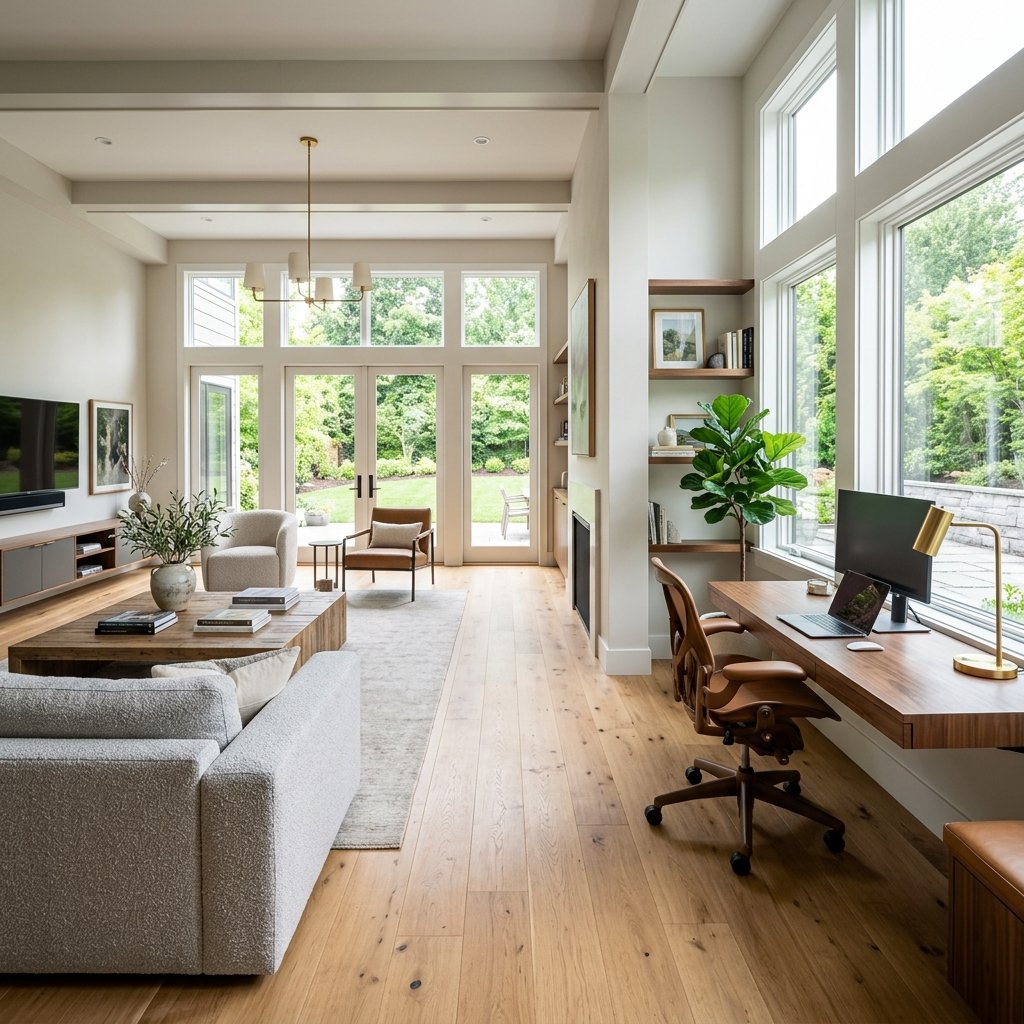
With hybrid work models becoming the norm in Bangalore’s tech sector, a dedicated home office is no longer optional. In a 2 BHK, working from home usually means taking over the guest bedroom or setting up a desk in the living room — leading to compromised privacy and work-life blurring. A 3 BHK provides that crucial third room, which can function seamlessly as a quiet, dedicated workspace, fundamentally improving the quality of daily life.
B. Long-Term Utility and Savings
A 2 BHK often has a "shelf life" for a growing family. Once a second child arrives, or elderly parents move in, the space constraints become severe. Upgrading from a 2 BHK to a 3 BHK five years down the line involves significant friction: capital gains tax, stamp duty on the new purchase (which in Karnataka is substantial), brokerage fees, and the physical hassle of shifting. Buying a 3 BHK initially — even if it stretches the budget slightly — often proves more economical over a 10-year horizon.
3. The 2.5 BHK and 3.5 BHK: The Sweet Spots
Recognising the dilemma buyers face, progressive developers like Mana Projects have introduced hybrid configurations designed to offer the best of both worlds.
A 2.5 BHK includes a standard 2 BHK layout plus a smaller half-room. This space is not large enough to be a full master bedroom but is perfectly sized for a dedicated home office, a child's nursery, or a study. It provides the utility of a third room without the full capital cost of a 3 BHK.
Similarly, a 3.5 BHK (offered in premium projects like Mana Skanda) provides three full bedrooms plus an additional space. For multi-generational families or professionals requiring an extensive home studio, this configuration offers luxury-level space utility without jumping to the price bracket of a massive 4 BHK.
4. Financial Considerations Beyond the Purchase Price
When choosing between a 2 BHK and a 3 BHK, buyers often focus entirely on the base price and EMI difference. However, several other financial factors should influence your decision:
- Interior Costs: Furnishing a 3 BHK will cost proportionately more. An extra bedroom means an extra wardrobe, bed, AC unit, and electrical fittings. You must budget an additional 15–20% on your interior costs when moving from a 2 BHK to a 3 BHK.
- Maintenance Charges: Apartment maintenance is calculated per square foot. Over a 10-year holding period, the monthly maintenance on a 1,600 sq ft 3 BHK versus a 1,100 sq ft 2 BHK will represent a significant recurring expense. Ensure your monthly cash flow can comfortably absorb this.
- Resale Dynamics: While 2 BHKs sell faster, 3 BHKs in premium projects often command a higher price-per-square-foot premium on the secondary market, simply because of scarcity. Developers typically build fewer 3 BHK units than 2 BHK units, making well-designed 3 BHKs highly sought after by upgrade buyers.
5. Evaluating the Floor Plan
A poorly designed 3 BHK can feel more cramped than a brilliantly designed 2 BHK. When comparing options, look past the bedroom count and evaluate the efficiency of the floor plan.
Check the carpet area to super-built-up area ratio (loading factor). A 3 BHK with a high loading factor might have bedrooms that are barely 10x10 feet, leaving no room for a study desk or additional storage. Conversely, premium developers like Mana Projects focus on zero-wastage floor plans, ensuring that the carpet area is maximized for actual living space rather than lost in long, dark corridors.
"Do not buy a 3 BHK if the third bedroom is too small to fit a standard bed and wardrobe. You are paying for a label, not utility."
6. How to Make Your Decision
To break the deadlock, ask yourself the following three questions:
- What does my family look like in 5 years? If you plan to have children, or if your parents will be moving in with you, a 2 BHK will become inadequate quickly. Stretch for the 3 BHK.
- What is my work-from-home reality? If both partners work from home frequently, a 3 BHK is non-negotiable for maintaining professional productivity and marital harmony.
- Is this an investment or an end-use purchase? If you are buying purely to rent out and generate passive income, a 2 BHK in a high-demand IT corridor offers the best risk-to-reward ratio.
7. Frequently Asked Questions
8. Final Thoughts
There is no universal right answer to the 2 BHK vs 3 BHK debate — there is only the right answer for your specific trajectory. If liquidity, yield, and budget management are your primary concerns today, a 2 BHK is a solid, proven asset. But if you are putting down roots, require dedicated workspace, and want to avoid the friction of upgrading in a few years, a 3 BHK is the smarter long-term play.
Mana Projects offers intelligently designed configurations across both categories in all our major developments. We focus on zero-wastage floor plans, ensuring that whether you choose a 2 BHK or a 3.5 BHK, you are paying for space you will actually use.
Find the Right Layout for Your Family
Explore intelligently designed 2, 3, and 4 BHK homes across Mana Projects.